Reduce Alert Fatigue Without Missing What Matters
Reduce alert fatigue by classifying events, deduplicating noise, protecting urgency, and asking for acknowledgement only when a person must act.
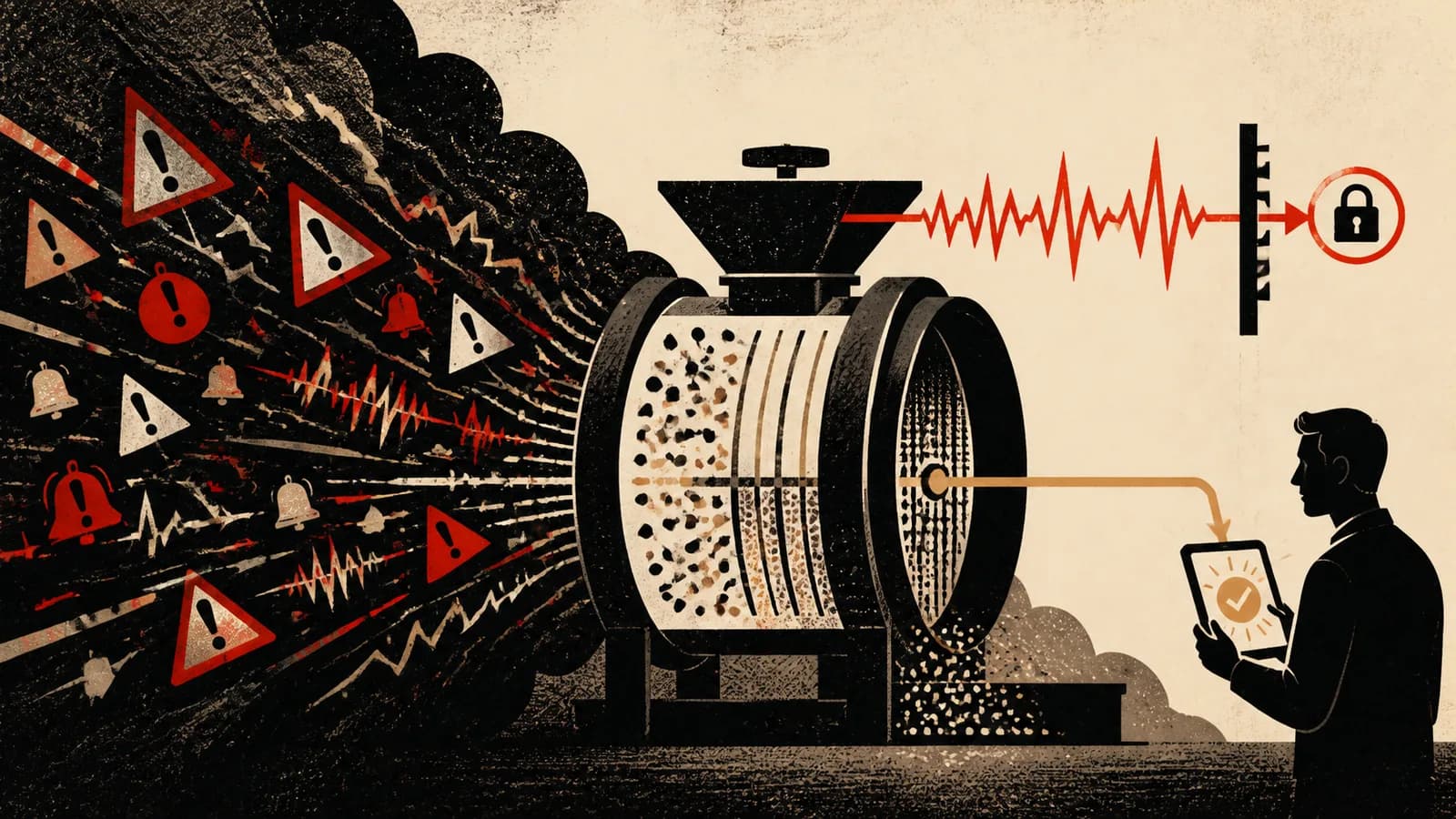
Reduce alert fatigue by sending fewer events, routing each event to its owner, and reserving urgency for moments that require a person to act. Start at the source: deduplicate repeats, notify on meaningful state changes, and keep informational activity out of the urgent channel.
The goal is not a quieter phone at any cost. It is a signal people can trust enough to leave enabled.
The interruption we invited shows why a trusted notification begins with permission and a promise chosen by the recipient.
Classify before you route
Classify each event into one of four categories before it reaches PingRoom:
- Record only: useful for history or debugging, but no one needs to see it now.
- Routine update: worth showing in a dashboard, digest, or low-noise room.
- Action required: a named owner needs to make a decision or perform a task.
- Urgent: delay creates meaningful harm, so someone must respond promptly.
If the team cannot agree which category an event belongs to, it is not ready for an urgent notification. Write down the condition, expected owner, and next action first. “CPU high” is an observation; “production API saturation requires the on-call engineer to shed load” is an actionable signal.
Do not use PingRoom as a mirror of every monitoring event, build message, calendar reminder, and chat mention. Send only state changes that alter human work.
Remove duplicates at the source
Retries, flapping checks, and multiple monitors watching the same dependency can turn one problem into dozens of alerts. Group those events before delivery whenever the source system allows it.
For monitoring, send transitions such as Firing, Escalated, and Recovered, not every evaluation while a condition remains true. Give one incident or job a stable correlation_id so later events can be associated with it. Apply a cooldown to unstable checks. When retrying the same ordinary PingRoom webhook request, reuse its Idempotency-Key header and identical body; correlation_id associates events but does not by itself prevent duplicate Pings.
Send recovery with a quieter sound so it closes the incident without sounding like another failure.
The night nothing happened frames reliable silence as a feature: routine success stays quiet, while failure earns attention.
The monitoring alert routing guide covers service ownership and event context. Send alerts through PingRoom’s incoming webhook feature, but keep evaluation and retry policy in the monitoring or workflow system.
Route to the smallest responsible audience
An engineering department is rarely the correct destination. Route by service ownership, environment, severity, or current duty. Unknown ownership should go to an actively watched triage room rather than a broad room or a silent discard.
Use room names that make their promise obvious: Payments production, Store operations, or Release approvals. Mixing low-value updates with critical failures teaches members that the room’s sound means nothing in particular.
When two audiences need different information, send them different signals. The person fixing a production failure needs the service, state, safe incident link, and next action. A stakeholder may only need a later summary. More recipients do not make an alert safer; they can make responsibility ambiguous.
Protect acknowledgement and urgency
Ask for acknowledgement only when the workflow genuinely waits on a human. An acknowledgement should answer a defined question such as “Who owns this incident?” or “May this deployment continue?” It should not be a ritual attached to informational updates.
Set an expectation for what happens if nobody responds. Expiry is not approval, and delivery is not acknowledgement. Keep the authoritative decision and audit trail in the system that owns the work.
Reserve the strongest sound for the smallest class of events. The custom notification sounds guide explains how a consistent sound can become part of a room’s language; changing sounds constantly or marking every event urgent destroys that learned meaning.
When everything was urgent demonstrates how an urgent label loses meaning when a team applies it to ordinary work.
Measure whether the signal worked
Delivery rate is necessary, but it does not tell you whether the right person understood and acted. During alert reviews, ask:
- Was this event actionable when it arrived?
- Did it reach the owning team instead of a broad audience?
- Was it a duplicate of an already-open incident?
- Did the title identify the system and state without opening a dashboard?
- If acknowledgement was required, did it lead to resolution?
- Did the notification expose sensitive data on a lock screen?
Remove or downgrade alerts that repeatedly fail those tests. When a missed signal occurs, fix classification, ownership, or escalation rather than making every neighboring alert louder.
The team with perfect delivery distinguishes a notification arriving from the human work actually being resolved.
The server-down alert guide explains the boundary: PingRoom is an attention channel, not a monitoring engine, incident timeline, or guaranteed pager. Critical systems should retain native escalation, redundant paging, and durable status history. Device settings, connectivity, and push providers can delay or suppress delivery.
See PingRoom Stories for short examples of classification, ownership, and escalation.

PingRoom
The Ping that cuts through.