When an Agent Hands the Work to You
PingRoom Handoff gives agents a durable way to transfer a live task to a person, preserve its context, and know when responsibility changed hands.

Good agents know how to continue. Great agents know when to stop.
There is a point in many workflows where autonomy stops being useful: the browser needs a signed-in person, a production incident needs an owner, a customer needs a judgment call, or the next action carries consequences the agent should not accept on its own.
PingRoom Handoff makes that boundary explicit. An agent transfers a task to a person, the person receives it as an actionable Ping, and the system records when responsibility changes hands.
More than "please take a look"
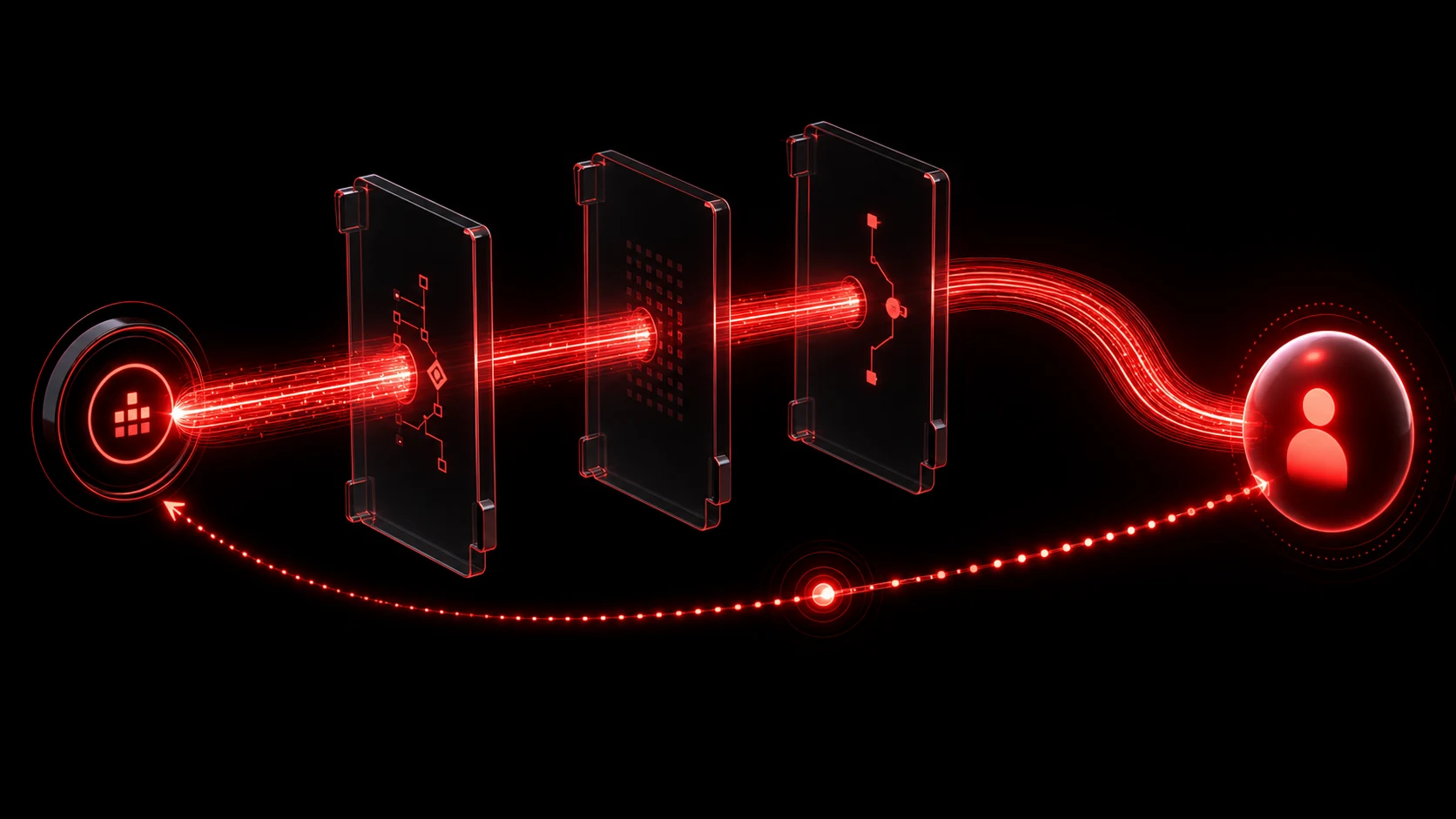
A handoff carries the message, the room, the intended recipient, and the provenance of the agent that created it. It can also require acknowledgement, so the agent does not confuse successful delivery with human ownership.
Targeting is private by design. A handoff meant for one person does not become room-wide content just because it uses a shared room as the route. Readers see what they are allowed to see, and agent identity remains attached to the event for audit and display.
Durable through retries
The uncomfortable part of action delivery is everything that happens after the happy path: a worker restarts, a request is replayed, a device is temporarily unreachable, or the same acknowledgement arrives twice.
Handoffs use a durable outbox and stable delivery identity. Replay does not spend quota twice or widen the original audience. Duplicate actions converge on the stored result. Unknown delivery jobs move aside instead of holding up every Ping behind them.
Those are implementation details until the day something fails. On that day, they are the difference between "sent" and "safely transferred."
From the CLI and GitHub Actions
The agent CLI now exposes Handoff directly, so a local agent can transfer work from the shell. The PingRoom GitHub Action also returns handoff outputs, making the result available to later workflow steps.
That means a CI job can do the work it is qualified to do, hand the remaining step to the right person, and leave a structured trail instead of ending with a link buried in logs.
A clearer contract between humans and agents
Questions ask a human to decide. Approvals ask for permission. Handoffs transfer responsibility. They are related, but they are not the same primitive.
Naming that distinction matters. The agent knows it should stop. The human knows the task is now theirs. The system knows who created the event, who received it, and whether it was acknowledged.
Autonomy works better when the exit is designed as carefully as the entrance.

PingRoom
The Ping that cuts through.